Why handovers fail
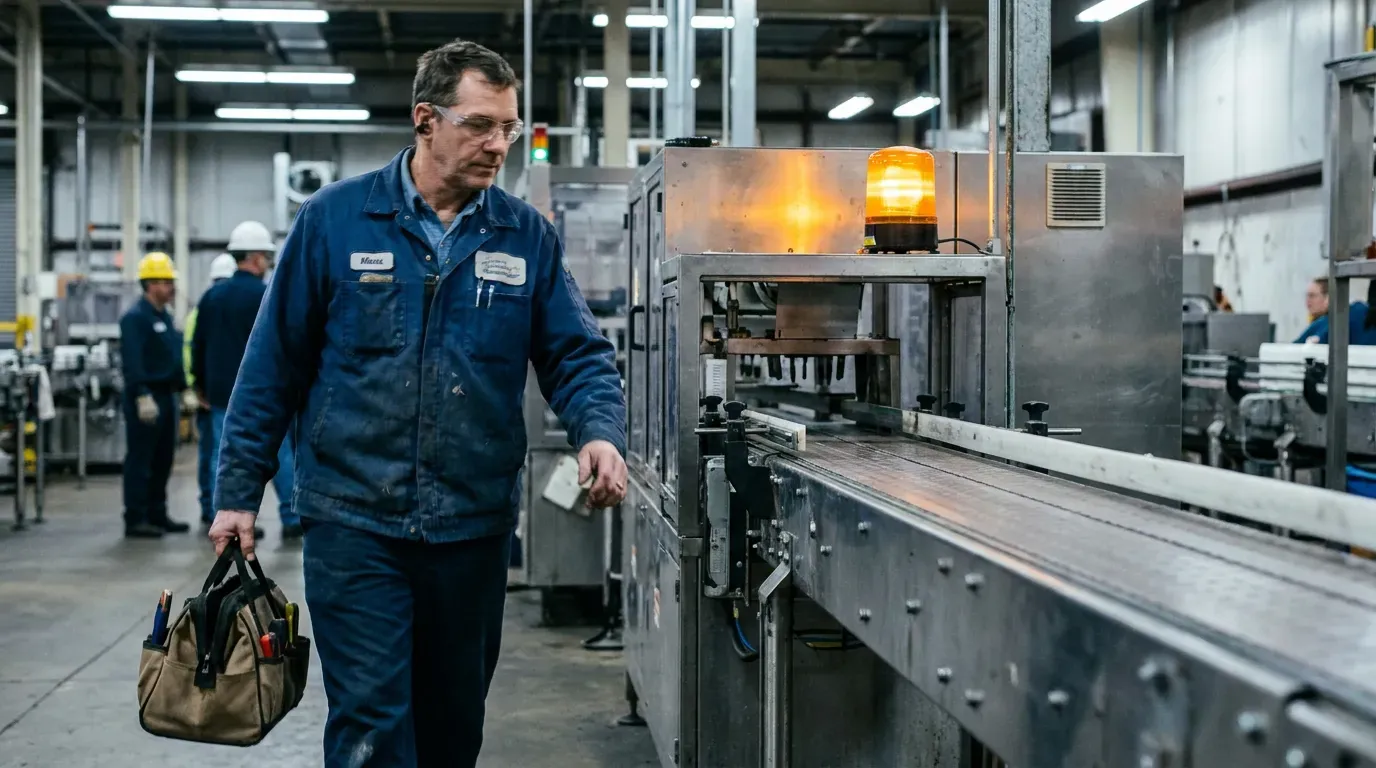
Most handovers fail in one of two ways. Either they are a conversation in the corridor that depends on two people being in the same place at the same time, or they are a notebook entry that says “all OK” on a night when a conveyor was running on a temporary repair. In both cases the incoming shift learns what matters by finding it.
Handover needs unresolved context
The incoming team does not need a diary of the shift. It needs to know what is still open:
- Machines down — which, since when, and what is being done.
- Temporary repairs — what is running on a workaround and what has to be watched.
- Waiting for parts — which job is blocked, which part, and when it is expected.
- Work in progress — jobs started and not finished, with where they were left.
- Must-watch conditions — a temperature, a noise, a leak that someone should check.
- Reports still to write — repairs done where the closeout is pending.
Counts are not enough
Knowing there are three open jobs does not tell the next shift what to do. A useful handover line has four parts: the asset, what happened, the current condition, and the next action where it is known. Compare “CV-107 — problem” with “CV-107 conveyor — drive belt slipping, running on a temporary repair, check temperature every hour, new belt arrives 10:00”. The second one can be acted on by someone who was not there.
Order and attention
The person writing the handover knows which lines matter most. That order should survive: the incoming shift should read the lines in the sequence they were written, with the ones that need attention clearly flagged, rather than a list re-sorted by a system that does not know the plant.
In UR Maintain the outgoing shift files a handover for the incoming one: the lines it carries, the machine or job each line names, and the lines flagged as needing attention. The incoming shift opens the whole handover in the order it was written. A filed handover cannot be edited afterwards, so what the next shift read is what was handed over. Filing a handover works offline too: it is queued on the device and filed when the plant is reachable.
Make handover part of the maintenance system
Keeping the handover in the same system as work, assets, parts and documents gives the incoming shift a better starting point. A line that names CV-107 can open CV-107: its open job, its history, the drawing. A handover in a separate notebook or chat cannot do that, and the context it carries disappears when the page is turned.
It also helps the job history. Notes, waits, diagnostics and handover remarks written on a job are listed back on it, oldest first, with the name of whoever wrote it — so the next shift reads the story of the job instead of guessing from the last line.
What a good handover looks like
An example from a night shift handing over to the morning:
- Needs attention — CV-107 conveyor: drive belt slipping, running on a temporary repair since 03:20. Check motor temperature hourly. New belt arrives around 10:00; replacement needs 30 minutes of stop, agree a slot with production.
- PK-081 packaging unit: photo sensor faulty, waiting for replacement part (ordered). Running with manual check at each changeover.
- MX-204 mixer: bearing inspection started, half done. Guard removed and tagged; finish before the 14:00 batch.
Three lines, each naming a machine, each telling the next shift what to do. Nobody on the morning shift needs to find the night technician to understand any of them.
Who writes it, and when
The person who was there writes the line — not a supervisor summarising at the end. The best moment is when the item becomes unresolved: the temporary repair is in, the part is ordered, the job is paused. A handover assembled in the last ten minutes of a shift is where details get lost.
Frequently asked questions
Should the handover repeat everything that was done? No. Completed work belongs in the job history, where it can be read when needed. The handover is for what the next shift has to act on or watch.
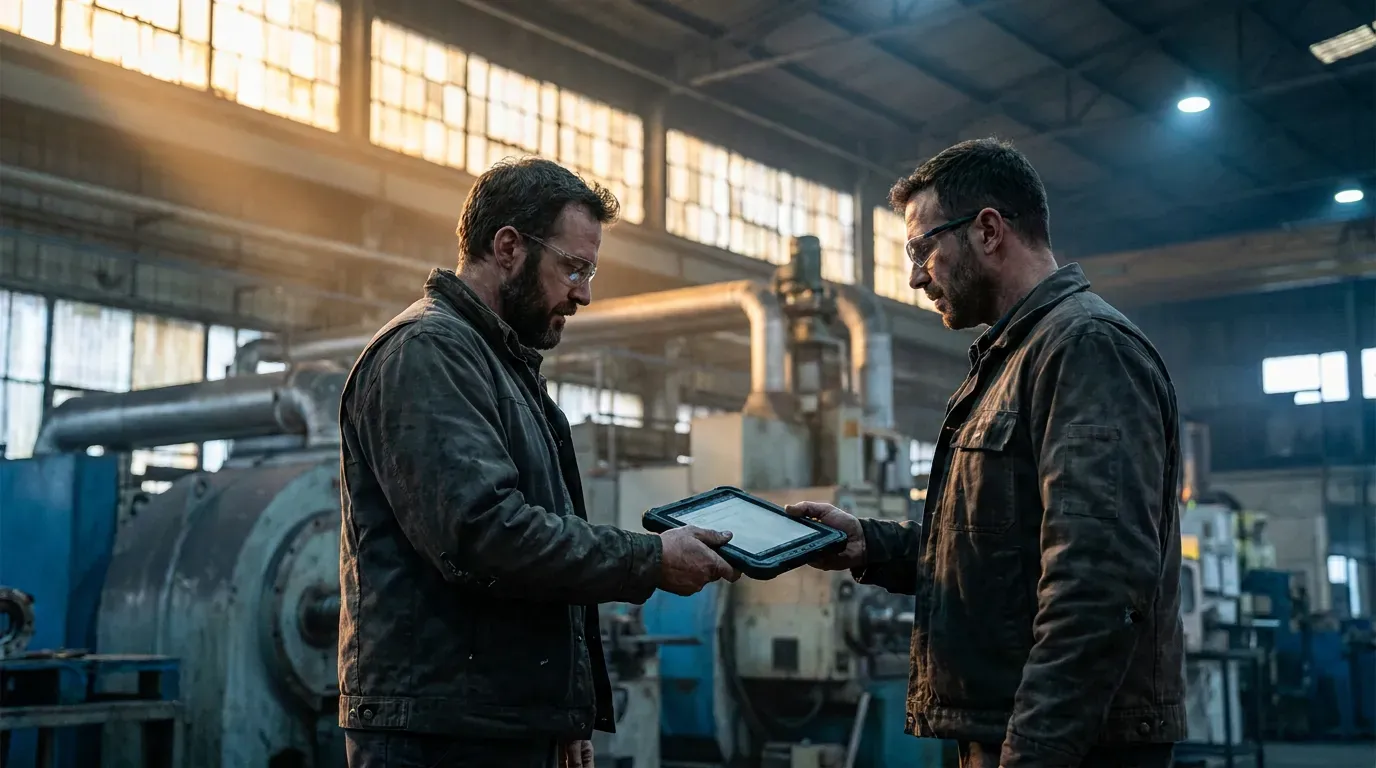
Is a verbal handover enough? As a supplement, yes; as the record, no. A spoken handover depends on two people meeting, and nothing of it survives the shift after that.
A simple handover template
- Machines down and running on temporary repairs — first.
- Jobs blocked, with the reason and what unblocks them.
- Work in progress and where it was left.
- Watch items with a clear check and a time.
- Anything the incoming supervisor must decide.
Five sections, one line per item, each naming a machine. If a handover takes more than five minutes to read, it is carrying too much.
Handover quality depends on what was recorded during the shift. Breakdown reporting that does not slow the repair covers the other half of that story.