Why offline matters in industry
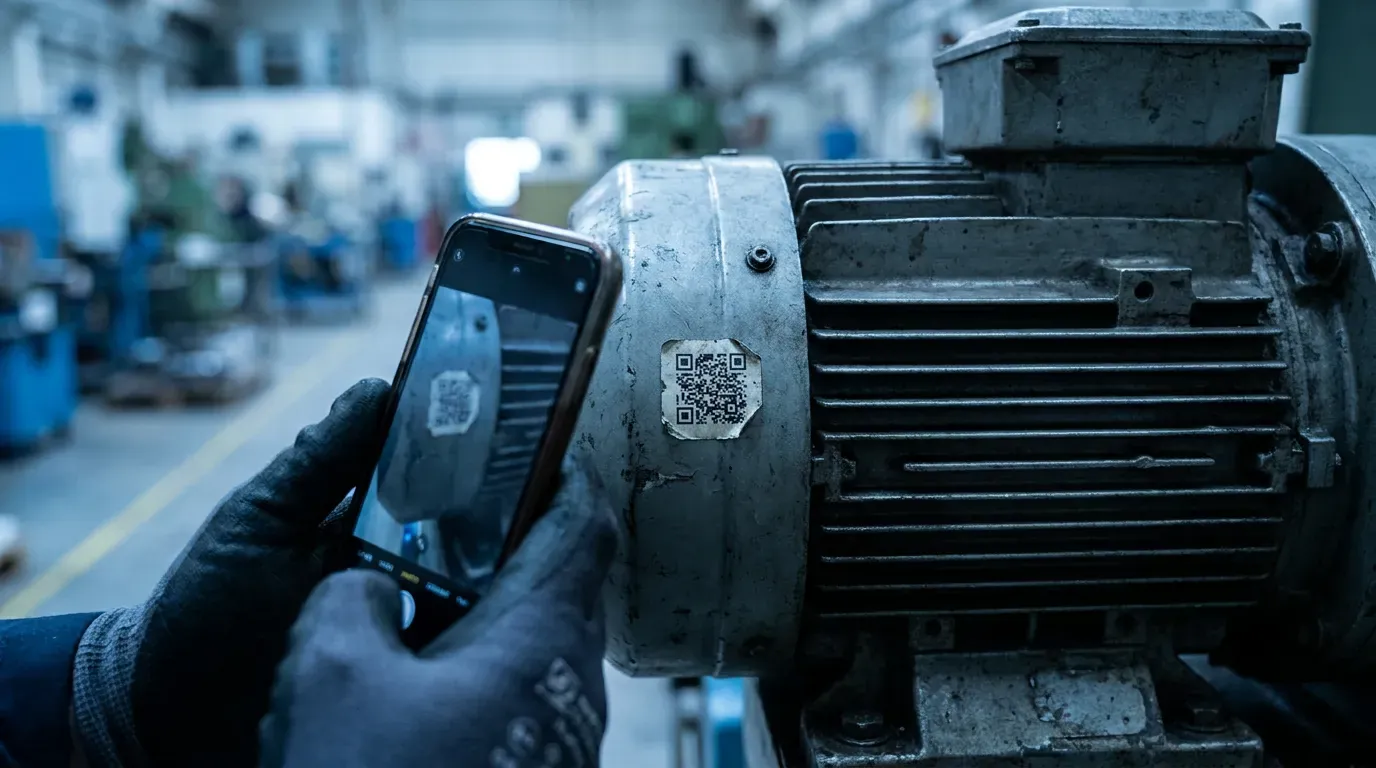
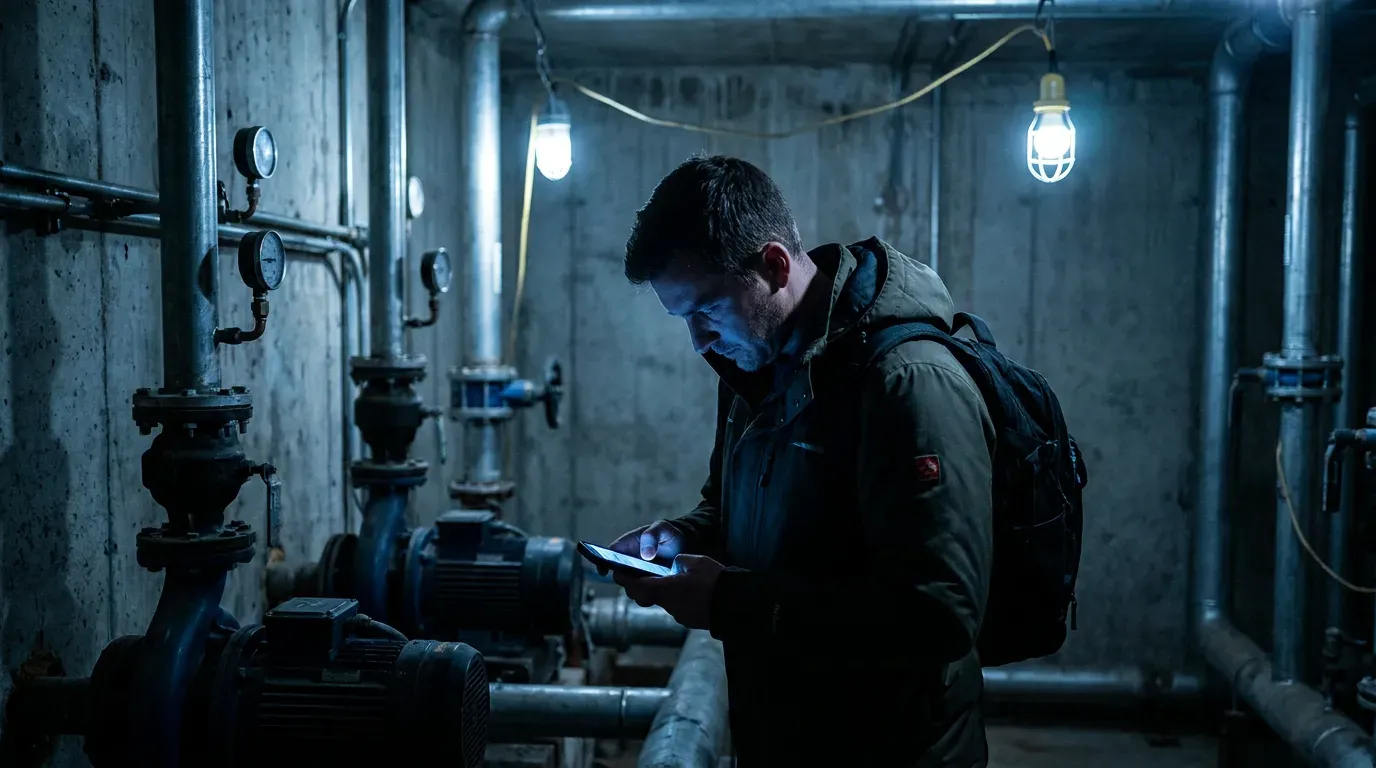
Factories are hard places for radio. Steel structures, basements, cold stores and the far ends of warehouses all have dead spots, and they are often exactly where machines fail. A maintenance app that only works with a signal pushes the technician back to paper or memory at the moment the record matters most.
Offline is a per-action property
A connection is not simply present or absent; it is present for some actions and not others. Filing a defect report written on a device in a basement is useful. A stock issue made offline needs care — the plant has to check it against the current balance when it arrives, and refuse it visibly if the bin would go below zero.
So the honest design is a list, not a slogan: these actions queue, those actions need the network, and the screen tells you which is which before you start typing. In UR Maintain, defect reports, the six job commands — take, start, wait, resume, machine running, finish the report — photos, inspections, inventory movements, preventive-maintenance commands and shift handovers all work offline. Supervisor actions such as verify and close stay online by design, and the screens say which is which. The product status page keeps that list current.
Queued work must be safe to repeat
Shop-floor networks fail mid-request. If a retry can create a second work order, or take the same job twice, nobody will trust the queue. Every queued change carries an identity that makes sending it twice equivalent to sending it once — so a technician who taps “send” three times in a bad signal area creates one record, not three.
A refusal must be visible
The failure mode that kills offline systems is the silent one: a report that appears filed on the device and never reached the plant. A durable refusal is the answer — the report is marked as needing review, with the reason, and retrying returns the same answer rather than looping forever. A connectivity strip that shows what is waiting and whether the plant has confirmed it turns “did it go through?” into something the technician can see.
Offline results must say what they searched
When a search box answers with no connection, it can only answer from what the device itself holds. Presenting that subset as the plant's answer is a lie of omission that somebody will act on. Labelling results as offline costs one line of screen space and prevents a wrong decision.
And cold start is its own problem
Capturing work offline is one thing; opening the application with no network at all is another. UR Maintain ships a service worker that keeps the application shell on the device, so a handheld closed in a dead zone opens the app again instead of a blank page. We list one limit openly: no automated test exercises that worker yet, so it is configured, not proven. That is the difference between a claim and a status.
A shift in a dead spot
A technician goes down to the compressor room, where the signal disappears at the bottom of the stairs. He finds a leaking valve, files a defect report with a photo and takes the job. The phone stores both and the connectivity strip shows two items waiting. He works the repair, records the machine running and climbs back up. On the stairs the phone reconnects; both items are sent, the plant confirms them, and the strip clears. Had the plant refused one — say the job was already taken by someone else — the item would show “Needs review” with the reason, instead of disappearing or retrying forever.
What should never be offline
It is tempting to make everything work offline. Some things should not. Issuing stock from a bin needs the current balance, or two technicians can take the last part twice. Approving or closing work that someone else verifies needs the latest state. A system that refuses those actions offline — and says why — is safer than one that accepts them and reconciles later.
Questions to ask any vendor about offline
- Which exact actions work with no connection, and which do not?
- What happens if the same queued action is sent twice?
- Where do I see that a queued record was refused, and why?
- What does search return offline, and does it say so?
- Does the app open with no network at all?
A vendor who answers all five precisely has thought about the shop floor. One who answers “yes, it works offline” has not. For the bigger picture behind these choices, see why a CMMS should not turn technicians into data-entry clerks.